
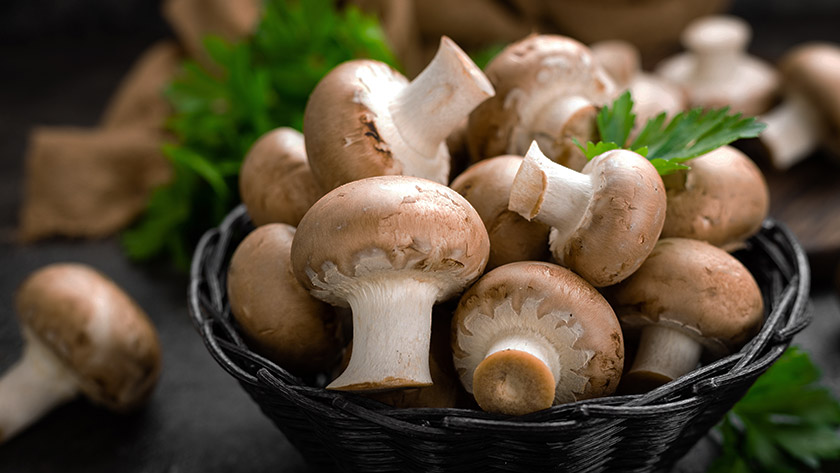
In India’s ever-evolving agricultural landscape, few ventures have demonstrated such strong potential for inclusive growth as mushroom cultivation. It’s low-cost, low-space, and high-yield—three magic words for small and marginal farmers who make up over 80% of India’s agrarian community. Yet, beyond being a side business, mushroom farming is fast emerging as a sustainable micro-enterprise model with real economic impact across rural and semi-urban India.
The economics are compelling. Setting up a small mushroom production unit of 100–200 trays can cost as little as ₹50,000, including basic infrastructure, spawn, and raw material. Within a single cropping cycle of 30–45 days, the same unit can generate a net income of ₹15,000–₹25,000, depending on the mushroom type and local demand. Compared to traditional crops like paddy or wheat—which require months, large land areas, and significant irrigation—the turnaround time and profitability of mushrooms are remarkable.
Government and institutional support has amplified this growth. Through initiatives by ICAR, NABARD, and state horticulture departments, farmers receive training, starter kits, and subsidies for infrastructure and cold storage. Women’s self-help groups (SHGs) and youth cooperatives have been particularly successful in adopting mushroom farming as a collective business model. In Odisha, Tamil Nadu, and Himachal Pradesh, clusters of women-led mushroom units are supplying local hotels, schools, and retail chains—providing both income and empowerment.
Beyond cultivation, mushroom-based entrepreneurship is spreading into processing and packaging. Dehydrated mushrooms, pickles, soups, and powders command premium prices, especially in urban and export markets. The rise of farm-to-table startups and organic food brands has opened direct sales channels, cutting out middlemen. In metros like Bengaluru and Pune, urban vertical farms are cultivating gourmet mushrooms—shiitake, enoki, and lion’s mane—for high-end restaurants, often at margins far exceeding traditional vegetables.
The broader economic impact extends to job creation and waste utilization. Since mushrooms grow on agricultural residues, farmers can repurpose crop byproducts—reducing stubble burning and improving soil health. Moreover, the spent substrate from mushroom beds becomes an excellent organic fertilizer, creating a circular economy where nothing goes to waste.
However, scaling the mushroom economy requires better supply chain infrastructure and financial literacy among farmers. Access to microcredit, insurance, and digital marketplaces can help stabilize income and expand reach. Integrating mushroom cultivation into rural livelihood missions could make it a cornerstone of India’s sustainable agriculture strategy.
At its heart, the mushroom economy is about transformation—of waste into wealth, of idle spaces into income sources, and of rural labor into skilled entrepreneurship. As India looks to the future of food and farming, mushrooms may prove that sometimes the smallest organisms can fuel the biggest change.
References: NABARD Agri-Entrepreneurship Report (2024); ICAR Directorate of Mushroom Research (2023); World Bank Rural Livelihoods Project Insights (2024).





Leave a Reply